Best TripIt alternatives, 2026
The best TripIt alternatives in 2026, honestly compared
TripIt still works, but it is aging, and its best features sit behind Pro. Here are the alternatives worth knowing, what each one is genuinely best for, what it costs, and where it falls short.
One distinction sorts this whole list: are you organizing a trip you already booked, or planning a new one? TripIt, Petrel, TripWaffle, Tineo, and Google Travel are organizers. Wanderlog is a planner. Tripsy sits between. Start there.
Petrel
Best if your bookings are already made and scattered across your inbox.
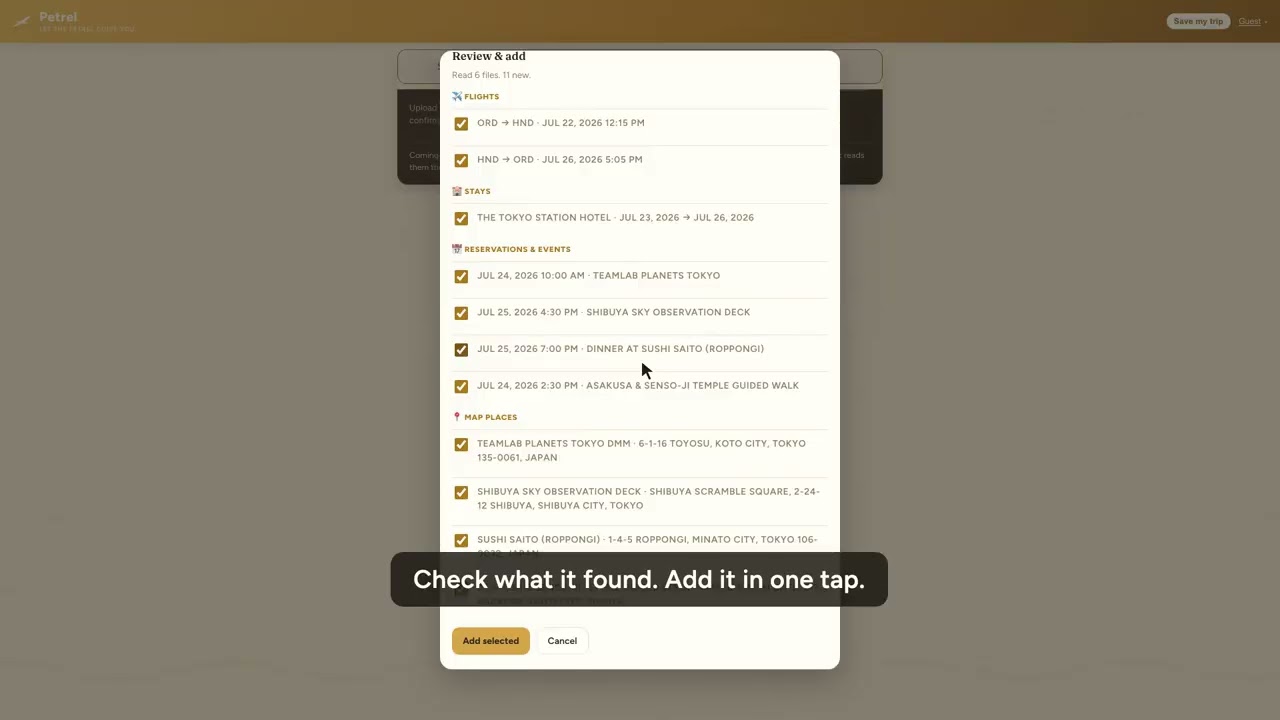
Drop in confirmations in any format, forwarded emails, PDFs, photos, or a whole folder of screenshots, and Petrel builds a day-by-day itinerary in under a minute, with travel time between stops. It shows live flight status, works offline, invites companions to view and edit free, splits costs, handles work trips with expense reports, and mails you a mapped recap after you get home.
Wanderlog
Best if your trip starts on a map, not in your inbox.
Wanderlog is the strongest planner here: discover places, optimize a driving route, build a day plan, and collaborate with friends in real time. Its free tier is genuinely generous. Reservation import and collaboration are free; auto Gmail scanning and offline maps are Pro.
Tripsy
Best if you live in the Apple ecosystem and want a refined native app.
Tripsy is beautifully built, with family sharing, email parsing, TripIt import, and a rare lifetime license. The catch is platform: creating and editing trips is Apple-only, with Android on a waitlist and the web view-only. It is also the priciest option here.
TripWaffle
Best if you want a free forever tracker and only forward emails.
A well-liked indie project: forward a confirmation, including PDF attachments, and it tracks the trip with flight alerts (delays, gate, baggage belt), pre-trip checklist emails, calendar feeds, travel stats, and offline access. No monetization, which travelers love, though it does raise a long-term sustainability question.
Tineo
Best if you want AI parsing with a connected Gmail inbox.
Tineo has a capable free tier, email import, AI parsing, collaboration, offline, and flight alerts, with an Ultra upgrade. It connects to Gmail to pull confirmations automatically. It leans hard on AI, which some travelers love and some find over-hyped.
Google Travel
Best if all your bookings land in Gmail and you just want to glance.
Google Travel (successor to the retired Google Trips app) quietly builds a trip timeline from bookings in your Gmail, with zero setup. It is free and automatic, but Gmail-only, essentially private to you, with no uploads, no real sharing, and no offline app.
TripIt (the one you are replacing)
Still fine if you want the classic and TripIt Pro's flight alerts.
TripIt invented this category and is dependable. Its real-time alerts, gate changes, and point tracking (all Pro) remain a genuine strength. But the free tier is basic, sharing is view-only, there is no AI parsing of anything beyond email, and the product has aged.
No account needed. Free for your first trip. Voyager is $49 a year for unlimited trips when you are ready.
Common questions
What is the best free TripIt alternative in 2026?
For a free start, Petrel unlocks your entire first trip with every feature and no credit card, TripWaffle is free forever with email-forward parsing and flight alerts, and Google Travel is free but limited to a passive Gmail timeline.
What is the best TripIt alternative for organizing booked trips?
Petrel. It turns booking confirmations in any format, including PDFs, photos, and folders of screenshots, into a day-by-day itinerary automatically, with live flight status, offline access, free sharing, and expense reports. Your first trip is free.
What is the best TripIt alternative for trip planning?
Wanderlog, when your trip starts on a map: discovering places, optimizing routes, and planning with friends. Its free tier is generous and Pro is about $39.99 a year.
What is the best TripIt alternative for Apple users?
Tripsy, a polished Apple-native app for iPhone, iPad, and Mac with family sharing. It is $59 a year or $299 lifetime, but Apple-only.